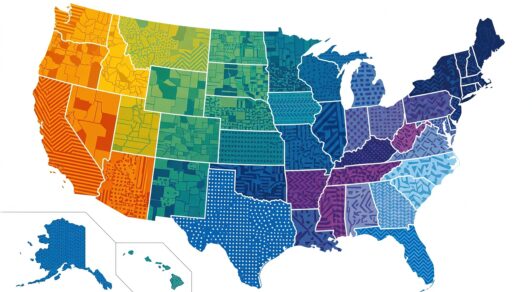







The National Women's Law Center's 8th annual review of key child care subsidy policies in all fifty states and the District of Columbia reveals that families were worse off in 37 states than they were in 2010 under one or more child care assistance policies. These 51 fact sheets explain the state of child care assistance in individual states and the District of Columbia.
The Elementary and Secondary Reauthorization Act of 2011 approved by the Senate Health, Education, Labor and Pensions Committee includes a number of provisions related to early learning.
(Washington, D.C.) Families in thirty-seven states are worse off under one or more key child care policies in 2011 than they were in 2010, according to a report released today by the National Women's Law Center.
This nationwide annual analysis by the National Women's Law Center compares child care assistance policies from year to year and to and 2001 in four policy areas: income eligibility, waiting lists for assistance, copayment requirements and reimbursement rates for providers. Some states have made progress, but most states continue to be behind where they were in 2001.
Get detailed information about each of the federal tax credits including the Earned Income Tax Credit, the Child and Dependent Care Tax Credit, Child Tax Credit, and the Making Work Pay Credit.
This fact sheet summarizes the child care assistance policies for the nine states that were awarded Race to the Top - Early Learning Challenge grants by the Department of Education and Department of Health and Human Services.
The National Women's Law Center's 8th annual review of key child care subsidy policies in all fifty states and the District of Columbia reveals that families were worse off in 37 states than they were in 2010 under one or more child care assistance policies. These 51 fact sheets explain the state of child care assistance in individual states and the District of Columbia.
Helen Blank from the National Women's Law Center (NWLC), Adele Robinson from the National Association for the Education of Young Children, Hannah Matthews from CLASP, and Harriet Dichter from the First Five Years Fund provided an overview of the FY 2012 and FY 2013 budgets, reauthorization of ESEA and CCDBG, and Race to the Top - Early Learning Challenge grants.
Nancy Duff Campbell is a founder and Co-President of the National Women's Law Center, one of the nation's pre-eminent women's rights organizations. A recognized expert on women's law and public policy issues, for over forty years Ms. Campbell has participated in the development and implementation of key legislative initiatives and litigation protecting women's rights, with a particular emphasis on issues affecting low-income women and their families.